Half the 12x16x4 filters I pull out of return grilles in Palm Beach Gardens are installed backwards. The other half have a thin ring of dust on the housing, which tells me air has been slipping around the filter for months. Both problems cost the same thing: filtration the homeowner paid for but never received.
After years of sealing ducts and changing filters in homes from here to Jupiter, I can say with confidence that the install matters almost as much as the filter itself. A backwards arrow, a bowed frame, or a pinch of dust on the gasket will quietly cancel out everything you spent extra for when you upgraded to a higher MERV.
This guide walks you through the same install I do on service calls. Ten minutes, no special tools, and a much better return on the money you put into your filter.
TL;DR Quick Answers
12x16x4 Air Filters
A 12x16x4 air filter is a 4-inch deep HVAC filter sized 12 by 16 by 4 inches nominal, with an actual frame measurement of 11.50 x 15.50 x 3.63 inches. The deeper 4-inch design packs significantly more pleat surface area into the return slot than a standard 1-inch filter, which delivers lower pressure on your blower, a longer service life, and stronger particle capture across every cycle.
Key specs at a glance:
MERV 8 captures around 90 percent of airborne particles (everyday dust and lint)
MERV 11 captures around 95 percent (pet dander, pollen, mild allergies)
MERV 13 captures up to 98 percent (allergies, asthma, smoke, virus-sized droplets)
Replace every 60 to 90 days for standard use, every six to eight weeks with pets or allergies, or stretch to six months in a clean household
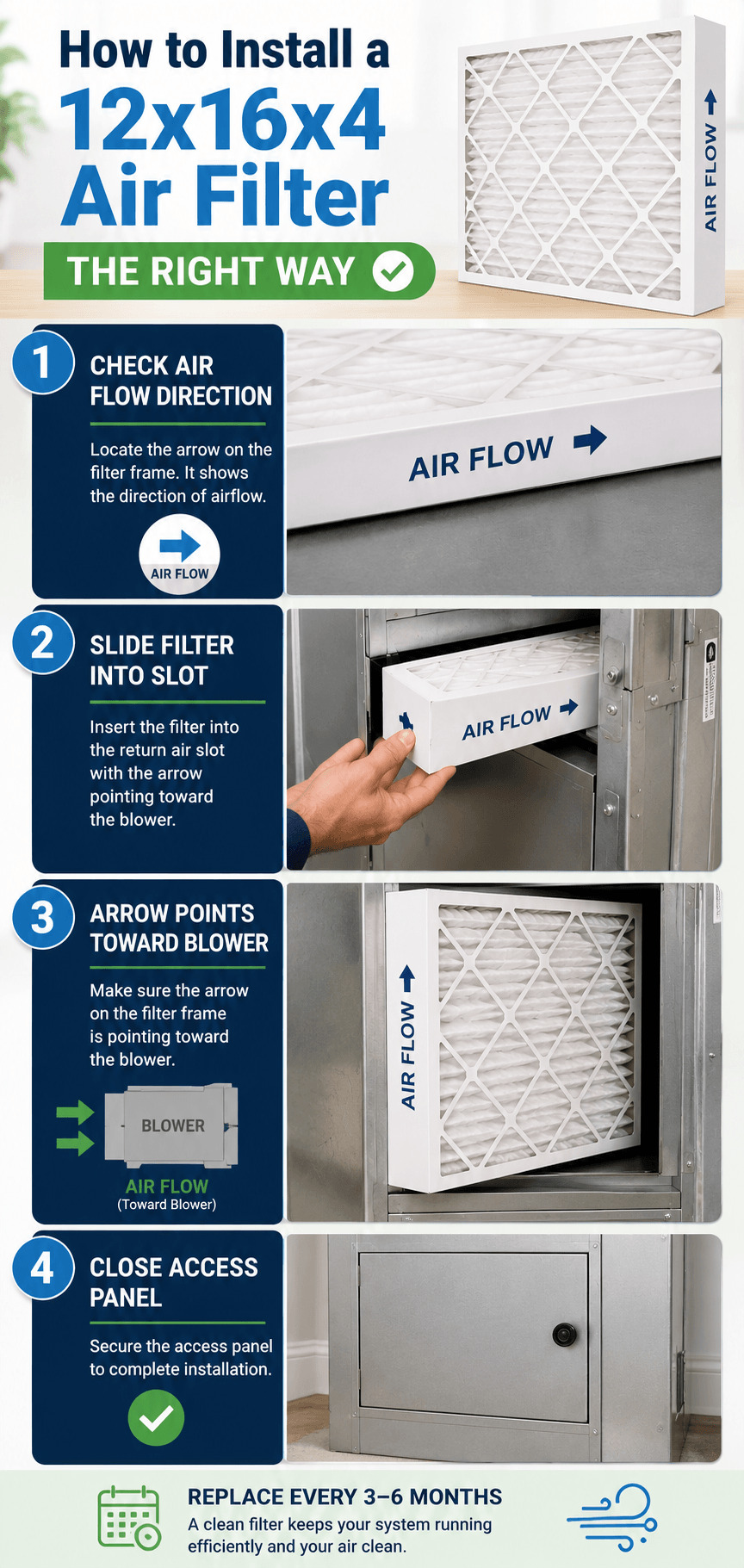
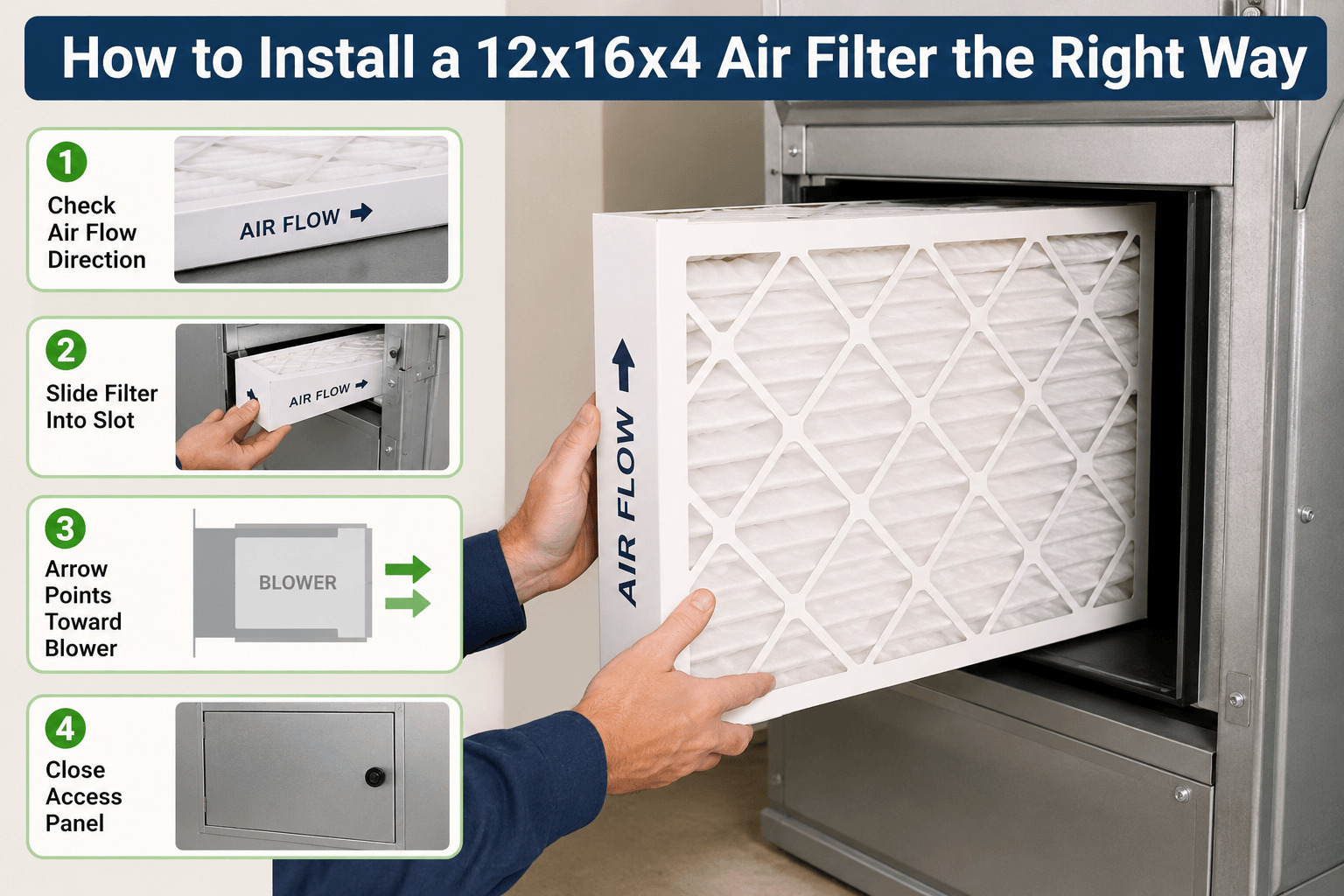
Install with the airflow arrow pointing toward the blower, and wipe the gasket every change so air does not bypass the filter
The unique upgrade most homeowners miss: a 12x16x4 filter only delivers its rated MERV when the frame seals tight against the housing. Wipe the slot, slide it in flat, and confirm a snug fit on all four edges before closing the cabinet.
Top Takeaways
The airflow arrow on a 12x16x4 filter points toward the blower, never toward the room.
A 4-inch filter must slide in flat. Bending the pleats permanently destroys filtration performance.
Wipe the filter slot every change. Dust on the gasket is the most common cause of bypass air.
MERV 11 is the right call for most South Florida homes. Go MERV 13 for allergies, pets, or asthma.
Write the install date on the filter frame. Plan to swap roughly every three months, longer in clean households without pets or allergies.
If you can slip a business card around the edge of the seated filter, your install is leaking.
A quality filter and sealed ducts multiply each other's value. Pair them.
Why the 12x16x4 size matters
A 12x16x4 air filter measures 12 inches by 16 inches by 4 inches in nominal sizing. The actual frame is typically 11.50 x 15.50 x 3.63 inches, which is standard for the industry and nothing to worry about. The 4-inch depth is the whole reason you bought this size. Compared to the 1-inch fiberglass filter most homes ship with, a 4-inch media filter packs more pleat surface area into the same return slot. That means lower pressure drop on your blower, a longer service life, and stronger particle capture across the board. For a general overview of how filtration actually works, the Wikipedia entry on air filters is a solid place to start.
What you'll need before you start
Five things sit on the workbench before I open a return grille:
A new 12x16x4 filter at the MERV rating that fits your household
A flashlight to spot dust buildup inside the cabinet
A dust mask and gloves for handling the old filter
A microfiber cloth for the gasket and frame slot
A permanent marker to date the new filter
For the filter itself, I keep recommending Filterbuy 12x16x4 air filters to homeowners across Palm Beach Gardens. They're made in the USA with a beverage-board frame that holds its shape in our humidity. The synthetic electrostatic media captures finer particles than standard cotton filters, and the MERV 13 option is rated to trap up to 98 percent of airborne particles.
The eight steps I follow on every install
Cut power at the thermostat. Loose dust gets pulled into the blower the moment you open the cabinet, so kill the system first.
Find the housing. In most Palm Beach Gardens homes, the filter sits behind a large return grille on a wall or ceiling, or inside a dedicated media cabinet beside the air handler.
Slide the old filter out flat. Keeping it level traps the captured dust against the filter face instead of dumping it on your floor.
Wipe the slot and gasket area. A thin line of dust on the frame is enough to break the seal and let air bypass your new filter.
Check the airflow arrow on the new filter. The arrow points toward the blower, never toward the room.
Slide the new filter in flat. A 4-inch filter must never get bent or folded. Once the pleats lose structure, the channels of unfiltered air last the life of the filter.
Confirm the seal. Run a business card around the perimeter. If it slips in anywhere, the filter is undersized, seated crooked, or fighting a damaged gasket. Pull it and reseat.
Close the cabinet, restore power, and write the install date on the frame with your marker. Your three-month reminder is now on the filter itself.
The four install mistakes I see most often
These are the four I see week after week:
Backwards airflow. This is the most common mistake by a wide margin, and it cuts filtration efficiency dramatically while shortening filter life.
Forcing the wrong size. A 13x16x4 or 12x16x5 will physically fit but won't seal. If the filter doesn't slide flat with snug contact on all four edges, it's the wrong filter.
Skipping the wipe-down. Dust on the gasket is the silent killer of MERV performance.
No date written on the frame. A 4-inch filter typically lasts three to six months between changes, and without a date, you either swap too early and waste money, or too late and strain the system.
Choosing the right MERV for a South Florida home
Three MERV tiers cover almost every home I work in:
MERV 8 catches household dust and lint. Captures around 90 percent of airborne particles, per Filterbuy testing.
MERV 11 is the workhorse for homes with pets, mild allergies, or anyone sensitive to spring pollen. Captures around 95 percent.
MERV 13 is the upgrade most allergy-prone Palm Beach Gardens families benefit from. Captures up to 98 percent, including finer particles and most virus-sized droplets.
If you're already running MERV 13 elsewhere in the house, stay consistent. Mixing MERV ratings across return points creates uneven pressure and uneven air quality, which is a problem I see constantly in homes with multiple zones.
“On every service call, the first thing I check is the dust ring on the housing around the filter. A clean ring there means the homeowner has been losing half their MERV rating to a quarter-inch gap they never noticed.”
Adele Mikell, HVAC & Duct Sealing Specialist, Palm Beach Gardens, FL
7 Essential Resources
Authoritative sources I share with homeowners who want to go deeper. Every link has been verified live as of publication.
EPA: The Inside Story, A Guide to Indoor Air Quality. Co-authored by EPA and the Consumer Product Safety Commission. The most thorough consumer-facing guide on home air pollution sources and what to do about them.
ENERGY STAR: Duct Sealing. Federal guidance on why sealed ducts matter and the real-dollar savings homeowners can expect.
U.S. Department of Energy: Air Conditioner Maintenance. The federal maintenance baseline, including filter replacement frequency and airflow protection.
EPA: Indoor Pollutants and Sources. A plain-language breakdown of the most common pollutants your filter actually fights every day.
EPA: Asthma and Your Health. Essential reading if anyone in your home deals with asthma or seasonal allergies.
ENERGY STAR: Heat and Cool Efficiently. Practical steps to improve HVAC efficiency, including filter habits and duct upgrades.
Wikipedia: Air Filter. A useful general overview of filter types, materials, and the science behind filtration.
3 Statistics That Should Change How You Think About Your Filter
Americans spend about 90 percent of their time indoors, and indoor pollutant levels are often 2 to 5 times higher than typical outdoor levels. Source: U.S. EPA, Indoor Air Quality. That's why what you trap at the return grille matters more than most homeowners realize.
About 20 to 30 percent of the air moving through a typical home's duct system is lost to leaks, holes, and poor connections. Source: ENERGY STAR, Duct Sealing. This is why I keep telling people that sealing your ducts and installing a quality 12x16x4 filter are the same project. One feeds the other.
Replacing a dirty, clogged filter with a clean one can lower HVAC energy use by 5 to 15 percent. Source: U.S. Department of Energy, Air Conditioner Maintenance. On a Florida summer power bill, that is not a rounding error.
Final Thoughts and Opinion
Most of the 12x16x4 install jobs I get called back on aren't broken systems. They're sealed-up symptoms of a small, fixable mistake: a backwards filter, a frame that bowed in summer heat, or a homeowner who upgraded to MERV 13 but skipped the wipe-down, so half the conditioned air still goes around the filter instead of through it.
Here's my honest opinion after years of this work: the filter you choose is only part of the job. The seal, the direction, and the dust you wipe off the gasket carry as much weight as the MERV rating on the box. You can buy the most expensive filter at the home store and lose its benefit to a quarter-inch gap you never noticed. You can also install a mid-range MERV 11 the right way and outperform your neighbor's untouched MERV 13 every day of the year.
Do this right once with a well-built 4-inch filter and a clean, sealed slot, and you buy yourself another three months of cleaner air, a quieter blower, and a noticeably lower power bill. That's the trade I want every homeowner in Palm Beach Gardens to make.
Frequently Asked Questions
Is a 12x16x4 air filter the same as 12 x 16 x 4?
Yes, the spaces and the 'x' symbols are just sizing notation. Both terms refer to a filter that is 12 inches by 16 inches by 4 inches in nominal sizing.
Where can I find a 12x16x4 air filter near me?
Big-box home improvement stores carry common 4-inch sizes, but selection is hit-or-miss. For consistent stock, I send homeowners to Filterbuy because they make 12x16x4 in MERV 8, 11, and 13 and ship straight to the door, which beats hunting an empty shelf in July.
Is a 12x16x4 allergen air filter worth it?
If anyone in your home has allergies, asthma, or pets, yes. A 12x16x4 allergen air filter (typically MERV 11 or MERV 13) captures much finer particles than the standard 1-inch fiberglass filter that came with most builder-grade systems. The 4-inch depth also means less pressure drop, so your blower is not penalized for the upgrade.
What's the best 12x16x4 air filter for allergies?
Look for MERV 13 with a quality beverage-board frame and pleats deep enough to fill the 4-inch slot. Avoid filters with flimsy cardboard frames. In Florida humidity, those warp within a season and start leaking around the edges. A well-built MERV 13 in a sturdy frame is, in my experience, the best 12x16x4 air filter for an allergy-prone household.
How long does a 12x16x4 filter actually last?
Filterbuy recommends replacing 12x16x4 filters every 60 to 90 days for standard use. With a clean household and no pets, you can stretch that to six months. With pets, allergies, smoke, or nearby construction, plan on every six to eight weeks. After duct sealing, expect your first filter to load slightly faster because more household air is actually being filtered. That is a good sign.
Can I install a 12x16x4 air filter myself, or do I need a pro?
You can absolutely do it yourself. The steps above will get you there in under ten minutes. Call a pro if the cabinet is in an attic crawl with limited clearance, if your slot doesn't hold the filter snugly anymore, or if you suspect duct leakage that's shortening filter life.
Install It the Right Way
A correct 12x16x4 install only delivers its rated MERV when the filter inside seats flush and seals tight against the housing. Shop Filterbuy 12x16x4 air filters in MERV 8, 11, or 13, made in the USA with the beverage-board frame that holds its seal in Florida humidity.
Learn more about HVAC Care from one of our HVAC solutions branches…
Filterbuy HVAC Solutions - Weston FL
2573 Mayfair Lane Weston FL 33327
(754) 296-3528
https://maps.app.goo.gl/E3tjmKf5VSWYghGc7